Qubic Weak Seeds: Wallet Used Math.random Before The 4.26.4 Fix
The Qubic weak seeds problem traced to Math.random in the wallet. A fix shipped October 18, the network restarted, and a claim window runs to May 1, 2027.

In this article+
Qubic's wallet built its recovery phrases with a function that was never meant for secrets. A public code change from October 18 shows each seed letter being picked with Math.random. The network restarted on October 20 and a claims process is open. This look at the Qubic weak seeds problem draws on the project's own code and pages.
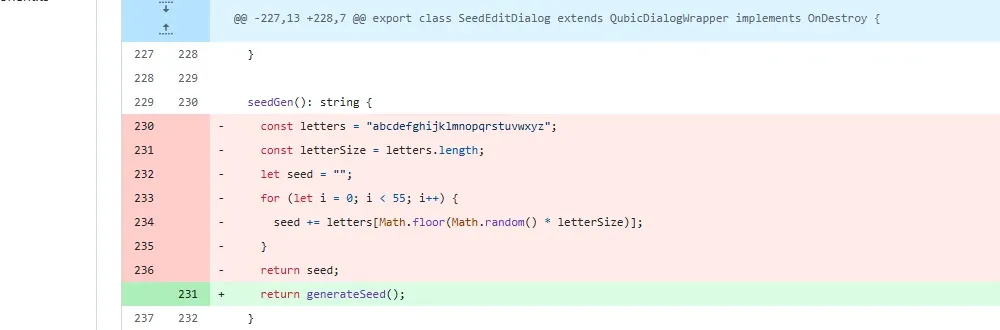
The removed seed generator in the qubic/wallet commit of October 18. Source: GitHub, qubic/wallet commit 09dd288.
What the old code did
A Qubic seed is 55 lowercase letters. The old function in the wallet looped 55 times and chose each letter with Math.random. JavaScript documentation says that function is not suitable for security uses, because its output can be predictable.
The fix landed at 03:28 UTC on October 18 under the message "use cryptographically secure seed generation". Release 4.26.4 followed about half an hour later. The new function reads bytes from the browser's secure random source. It throws an error if that source is missing instead of falling back.
The new code handles one more detail. Bytes run from 0 to 255 and 26 letters don't divide that evenly, so it throws away any byte of 234 or higher. That keeps each letter equally likely, which a plain remainder would not. The commit adds tests for that rejection step and for refilling a batch.
What Qubic says happened to the Qubic weak seeds
Cointelegraph reported that attackers drained about $1.4 million from 1,404 accounts, and that the chain was halted on Sunday, October 18. Qubic says wallet seeds from its web wallet on certain Apple devices and browsers were predictable, according to that report.
On October 20 at 18:14 UTC, the project's official X account said the network was live again. It said the Computor quorum had approved the recovery, the reclaim platform was open, and the first funds had already gone back to verified owners.
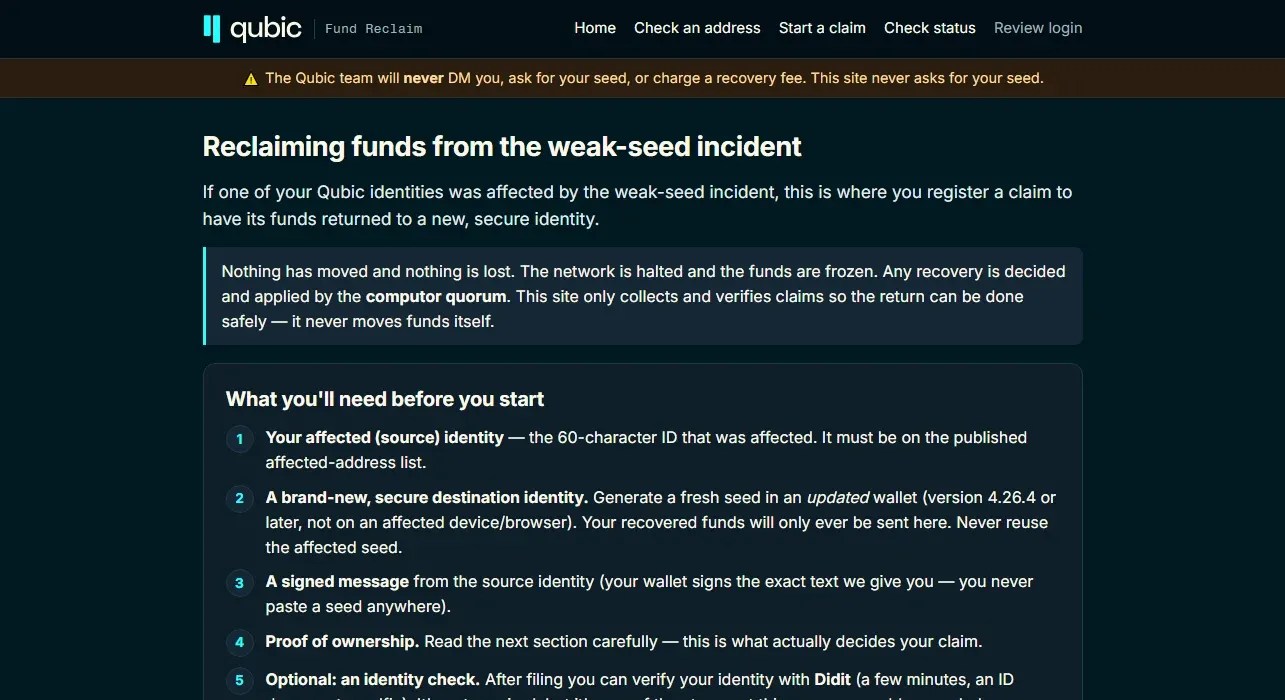
The top of Qubic's fund reclaim site. Source: Qubic Fund Reclaim.
How claims work
The reclaim site opens a claim window that runs through May 1, 2027. A claimant needs the affected identity, a new identity made in wallet version 4.26.4 or later, and a signed message. A signature alone proves little here, since an attacker could produce the same one. The site asks for outside evidence, with an exchange withdrawal receipt listed as the strongest.
Claims follow two lanes. A fast lane handles single, well-evidenced, uncontested claims, and an extended lane handles contested or larger ones with developer review. Approved claims are listed for seven days before payout, and competing claims stay frozen in escrow.
Where the money returns from depends on where it went. Funds still on Qubic come from a recovery escrow account. Funds sent to MEXC come back through the exchange, which the site calls slower and dependent on law enforcement. Wallets that were weak but not drained are released once the claim checks out.
If you made a Qubic wallet before October 18, look your address up on the reclaim site's affected list. Don't just assume the seed is fine. Every claim in the Qubic weak seeds case runs through that list.
Loading…
Written by
Brian Otieno reports on Bitcoin and Ethereum markets, spot ETF flows and derivatives data for Times of Crypto Era. Every figure in the pieces is checked against the live source before publishing.
View full profile →Related News

IOST Price Analysis: Volume Jumps 66x As IOST Climbs 70%
IOST price analysis after the October 19-21 surge: huge volume, a staircase of higher 4h closes near $0.00127 and two scenarios taken from closed candles.

NEAR Issuance Cut To 1.6% Is Live In A House Of Stake Vote
The NEAR issuance cut in HSP-029 would lower maximum issuance from 2.5% to 1.6% over 24 months. The House of Stake vote closes November 2 at 4:48 pm UTC.

Balancer Wind-Down Gets Dates: Pools Pause Oct 30, DAO Ends In 2027
The Balancer wind-down now has a calendar. Pools pause October 30, the v3 vault stops November 30 and redemption starts May 31, 2027, per a forum spec.