Zcash Block Time Draft Cuts 25 Seconds To 20 After NU7
Zcash block time would fall from 25 to 20 seconds under a draft ZIP posted November 8, with tests showing orphan rates of 1.9% to 3.3% on full 2 MB blocks.
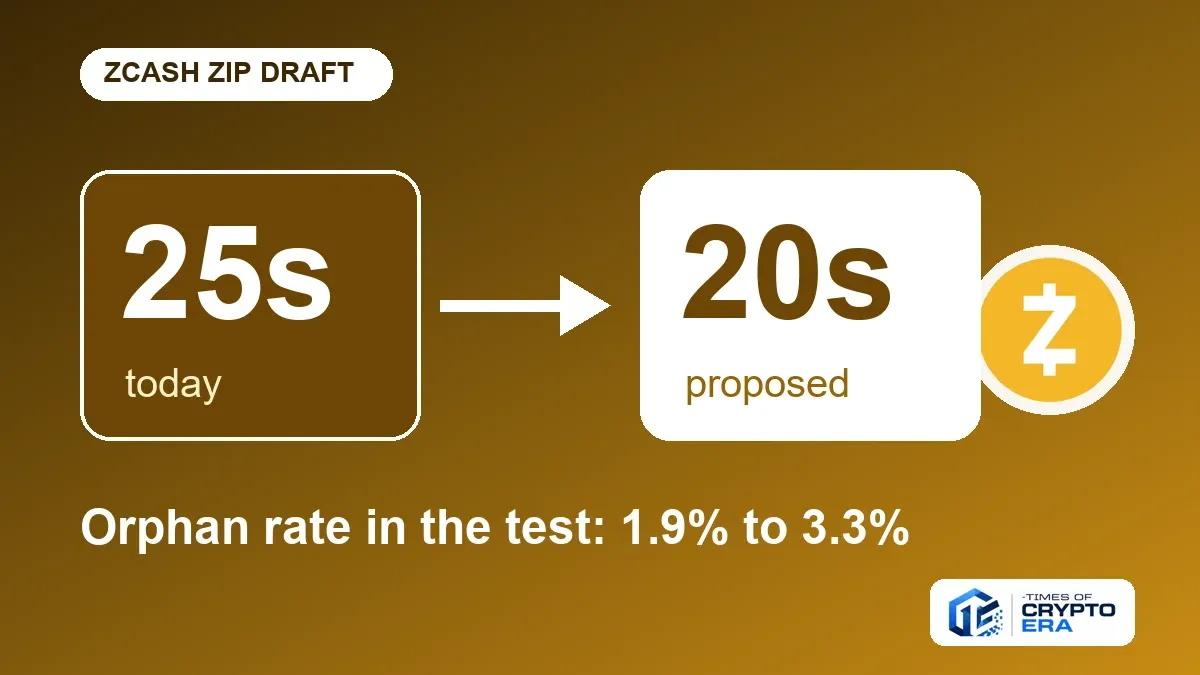
Zcash block time could fall again, only days after it fell the first time. A draft improvement proposal posted to the Zcash community forum on November 8 would cut the target spacing between blocks from 25 seconds to 20.
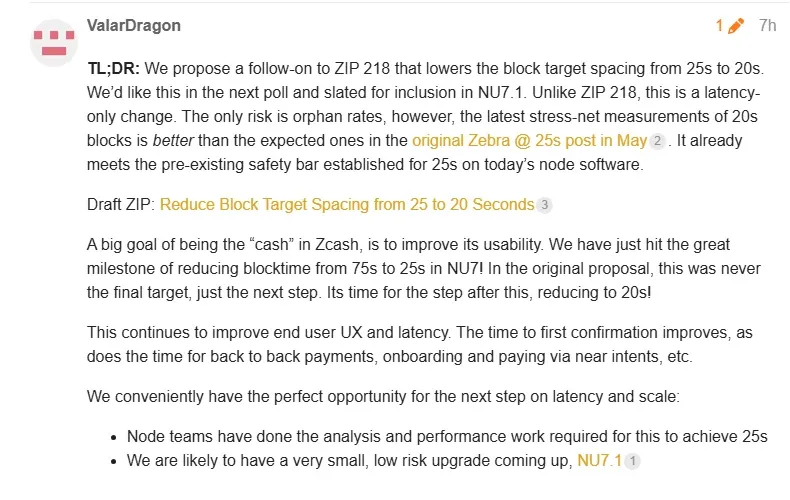
The opening post of the thread by forum user ValarDragon. Source: Zcash Community Forum, Proposal: Lower Zcash block target spacing from 25s to 20s.
ValarDragon posted it at 20:56 UTC and asks for a place in the next community poll and in NU7.1, a small follow-up upgrade. It builds on ZIP 218, the change that took the target from 75 seconds to 25 in NU7. We reported that upgrade's activation height in our earlier piece on Zcash NU7 and Zebra 7.0.0.
Zcash Block Time Today
NU7 went live at block 3,543,405, which Blockchair timestamps at 02:34:02 UTC on November 6. We pulled the latest 100 blocks on November 9, numbers 3,555,244 to 3,555,343. They averaged 24.6 seconds apart. That is right on the 25 second target. NU7 is doing what it promised.
A day would hold 4,320 blocks at 20 seconds, up from 3,456 today. A shorter Zcash block time means a payment reaches its first confirmation sooner. The author names point-of-sale payments, exchange deposits and swaps through NEAR Intents, where market makers wait for one confirmation before they act.
The Orphan Test Behind The Zcash Block Time Draft
Faster blocks raise the chance that two miners find a block at once, and one of them gets discarded. That is an orphan. The draft tests full 2 MB blocks at 20 seconds on an 80 miner network spread over 12 regions.
A network running only the Zakura node software saw 1.9% orphans. A network split evenly between Zakura and Zebra-Andele saw 3.3%. The original 25 second analysis from May used 4.68% in its experiment and 3.26% in its model. The new numbers sit under that old bar.
What Changes And What Stays
The 2 MB block size cap stays. Shielded action limits shrink by four fifths so that load per second stays the same. The global budget, Orchard actions and Ironwood actions per block drop from 330 to 264, and Sapling inputs plus outputs from 300 to 240.
Money supply per day stays the same too. Each block's subsidy shrinks by four fifths. Halving moves from every 5,040,000 blocks to every 6,300,000. In days, that is the same wait as before, so the date stays put.
The difficulty window moves from 102 to 128 blocks.
Replies So Far
The thread had five posts when we read it. One user asked why 20 seconds is the best number and not 17 or 21.4. ValarDragon answered that the chain peaks at 80 KB per second today and would reach 100 KB per second. The live orphan rate is lower than before NU7, the reply adds.
ValarDragon also named the next step after this one as doubling the maximum block size. Nothing is scheduled, and the draft needs a poll before any activation date exists. Any move to a faster Zcash block time would arrive with NU7.1 at the earliest. ZEC traded near $1,221 on CoinGecko on November 9. This is a news report, not investment advice.
Related News
Robinhood CEO Stock Sale: Tenev Sold 375,000 Shares in October
Robinhood CEO stock sale: Tenev sold 375,000 shares on October 5 under a 10b5-1 plan. The Form 4 shows zero direct Class A but 47.4M Class B still held.

Evernorth Merger Closes With XRP Priced At $1.43, Not $2.37
The Evernorth merger closed October 9 with XRP priced at $1.43069, down 39.5% from signing. See the 8-K share math, lock-up terms and trust redemptions.

Times Of Crypto Era Launches With Dedicated Crypto Markets Coverage
Times of Crypto Era launched this month with dedicated Bitcoin, Ethereum, Solana, DeFi and regulation coverage built around primary-source verification.
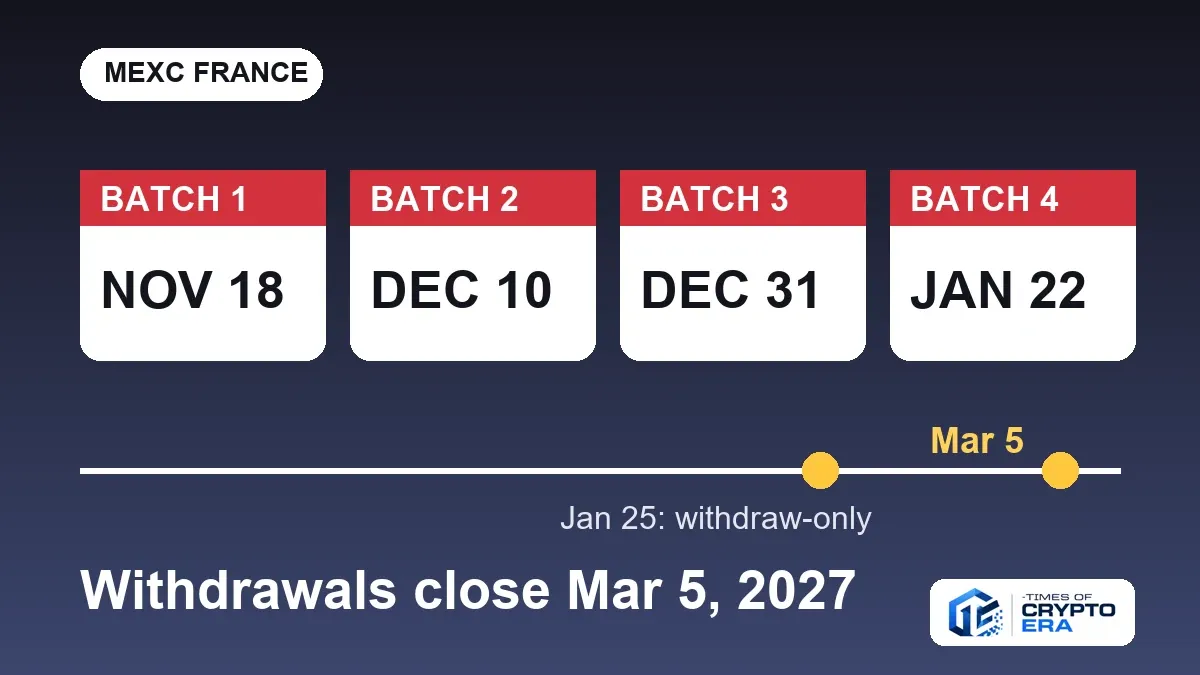
MEXC France Wind-Down Starts Nov 18 For Batch 1, Ends Mar 5
MEXC France wind-down runs in four batches from November 18, with withdrawals open until March 5, 2027, according to the exchange's own notice of October 28.