World Bank Stablecoin Test: Citi And Circle To Explore USDC Payments
World Bank stablecoin test with Citi and Circle was announced Nov 17, 2026. See the FundsChain base, the USDC role and what the release leaves unsaid.
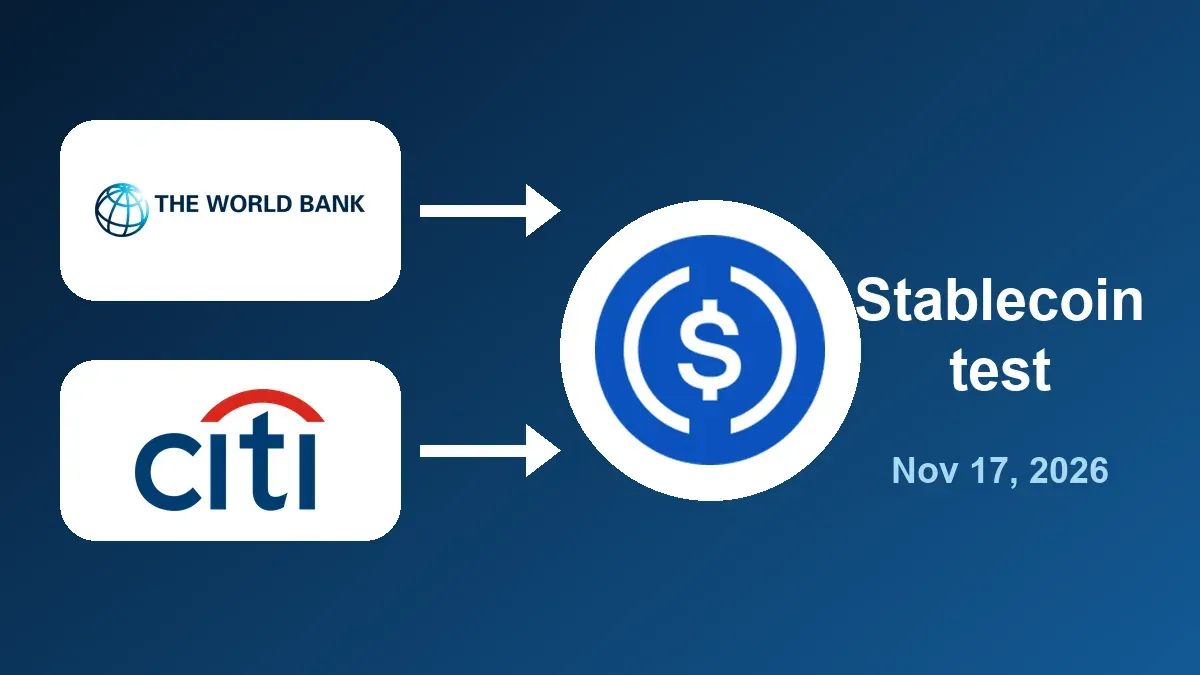
A World Bank stablecoin project exists, however, it is a mere exploration at the moment. On November 17, 2026, the World Bank Group announced that it will test out regulated dollar stablecoins in transferring its own funds through its association with Citi and Circle. The settlement coin mentioned in the announcement is USDC.
What the World Bank stablecoin test covers
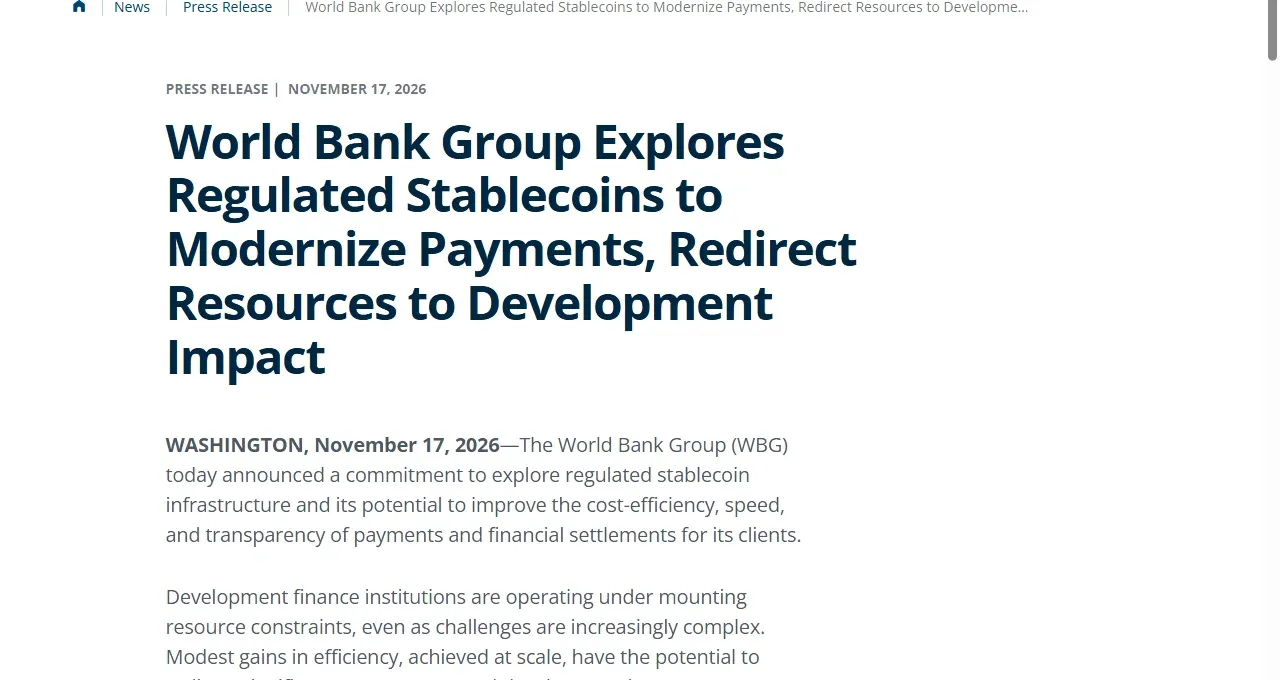
World Bank Group press release dated November 17, 2026, on exploring regulated stablecoin infrastructure. Source: World Bank.
As stated above, the World Bank stablecoin statement highlights a promise of exploration, not a launch. The Bank would like to find out if stablecoins of the dollar and blockchain payment rails may operate in parallel with their present schemes for disbursement of funds, based on correspondent banking and potentially improve them.
Citi would provide its existing connections to banking rails. Circle would offer the infrastructure behind the issuance and settlement of the funds in USDC. Simply put, an existing bank account on one end and a stablecoin on the other with the Bank's funds flowing through.
FundsChain is the base layer
The new work builds on another product of the Bank's - FundsChain. Over 350 projects from 96 different countries have already been connected to digital ledgers. All the parties that take part in a particular project get a picture of how the funds are used.
In other words, the Bank already traces spending through the ledgers. However, what the Bank explores right now is the payment process in question.
Citi and Circle explain their roles
Shahmir Khaliq, who leads services for Citi, said global commerce is becoming an always-on, digital-first environment. Khaliq cited his bank's network in over 180 jurisdictions, saying the objective is 24/7 capabilities such that funds can move real-time.
Jeremy Allaire of Circle called development finance one of the most important uses of internet-native money. His reasoning is that the Bank's initiatives may help create the standard for the responsible use of stable coin technology among global institutions. Neither of the two executives provided a monetary value for these transactions.
Why the Bank says it is doing this
The development finance institutions have constrained budgets but their challenges get complicated, said the statement. According to the release, small amounts of efficiency, accumulated through many iterations, can free up vast resources for implementation of projects.
Ajay Banga, the president of the Bank, said the aim is to improve "the financial plumbing of development work." He listed a health clinic built on time and a farmer paid before the harvest season ends. Allaire stated that fast-money transfer at internet speed was not to be limited to big banks and companies only.
What the World Bank stablecoin release leaves out
Several facts are also lacking in this announcement. There is neither an estimate of how many dollars will be used, nor when the operations will commence, nor a description of any particular countries involved in the transactions. Furthermore, there is no mention of which particular blockchain will be used for these transactions.
In the longer term, the World Bank said that they will review partnerships between the bank and other banks to extend their capabilities. Such an indication is essential as far as Circle and Citi are concerned because it implies that their partnership will merely constitute a starting point but not an exclusive one.
For those interested in bank-stablecoin relationships, one might compare this case with the case of tokenized deposits link between DBS and J.P. Morgan. The latter was designed for making round-the-clock US dollar transactions as well. This World Bank stablecoin release contains no data about the supply of the USDC or its price. Therefore, it can be regarded as a policy indicator.
Related News

BUIDL Liquidity Facility Goes Live With $50M Funded
The BUIDL liquidity facility from Securitize and Ethena went live on November 12 with $50 million funded and capacity of up to $100 million, per PR Newswire.
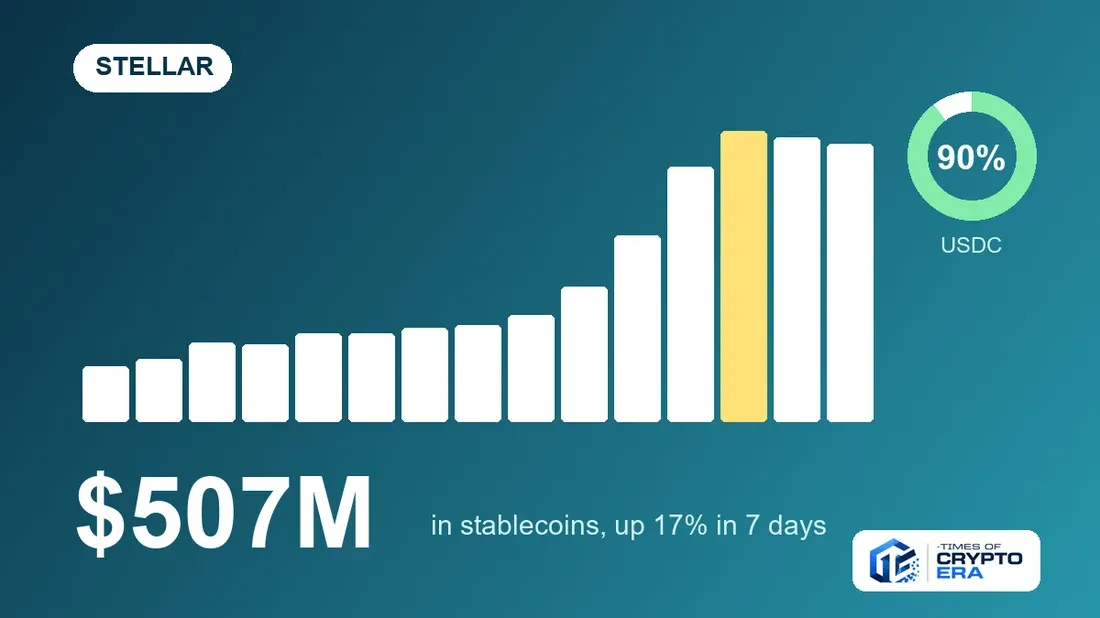
Stellar Stablecoin Supply Hits $507M, With USDC 90% Of It
Stellar stablecoin supply reached $506.83M on DefiLlama, up 17% in a week, with USDC at 89.74% of the total after peaking near $521M on October 17 this week.
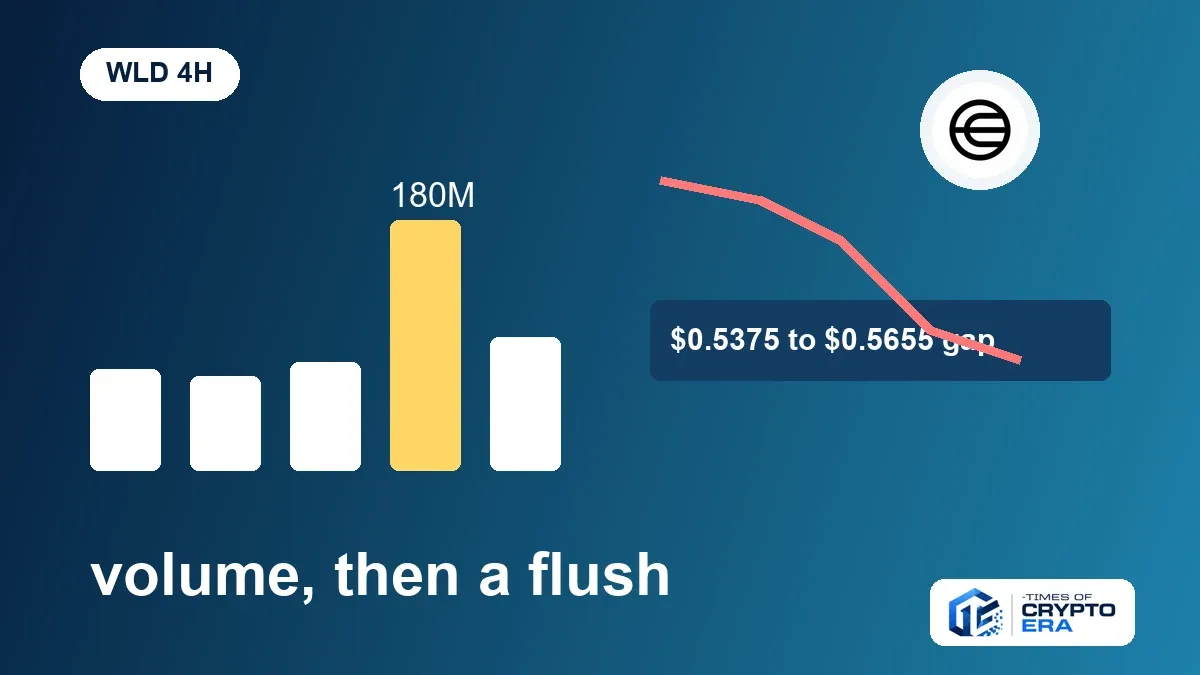
WLD Flush Takes Price Into A $0.5375 Gap After 180M Volume Day
The WLD flush on October 22 followed a 180M-token volume day and broke the 4h structure at $0.5655. Closed-candle levels and two 4h-close paths inside.

Injective Governance Proposal 717 Hits Quorum, Vote Ends Nov 16
Injective governance proposal 717 reached 39.11% turnout against 33.40% quorum. Voting on the Veyra v1.21.0 upgrade ends Nov 16, 2026. See the tally and plan.