XRP Ledger Quantum Accounts Would Add 3,627 Bytes To A Payment
XRP Ledger quantum accounts using ML-DSA-44 would make a payment 5,331 bytes against 1,704 today, according to the XRP Ledger Foundation's 2027 roadmap page.
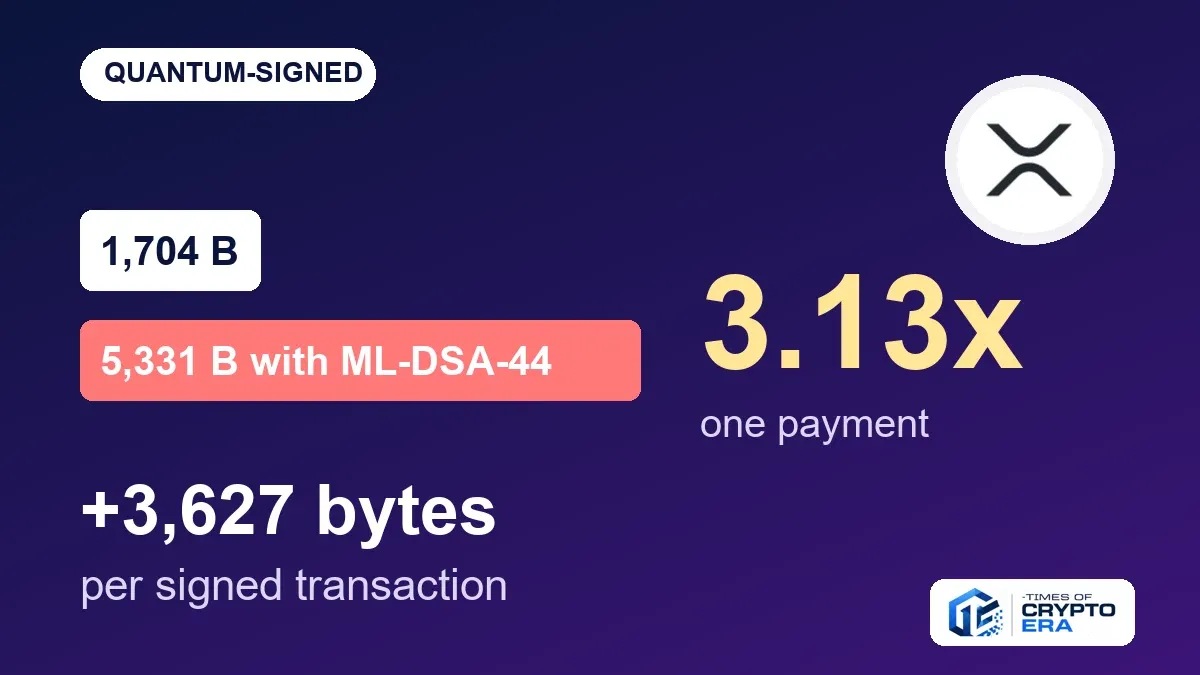
XRP Ledger quantum accounts have a price tag in bytes. The XRP Ledger Foundation's 2027 roadmap says a payment signed with the proposed ML-DSA-44 scheme would carry 3,627 more bytes than an ordinary payment. The entry was updated on November 4.
An ordinary payment is 1,704 bytes today. The roadmap puts a quantum-signed one at 5,331 bytes, or 3.13 times as much.
The roadmap page sets this out as a research entry. It carries a build estimate of 640 hours and a Ripple review estimate of 400 hours for the quantum accounts amendment.
Where XRP Ledger quantum accounts add bytes
Two numbers drive it. An ML-DSA-44 public key is 1,312 bytes, and the signature runs up to 2,420 bytes. That is 3,732 bytes per signed transaction.
A normal payment already carries a 33-byte key and a 72-byte signature. Subtract those and the extra is 3,627 bytes. The Foundation cites section 3.3 of the spec for the sizes.
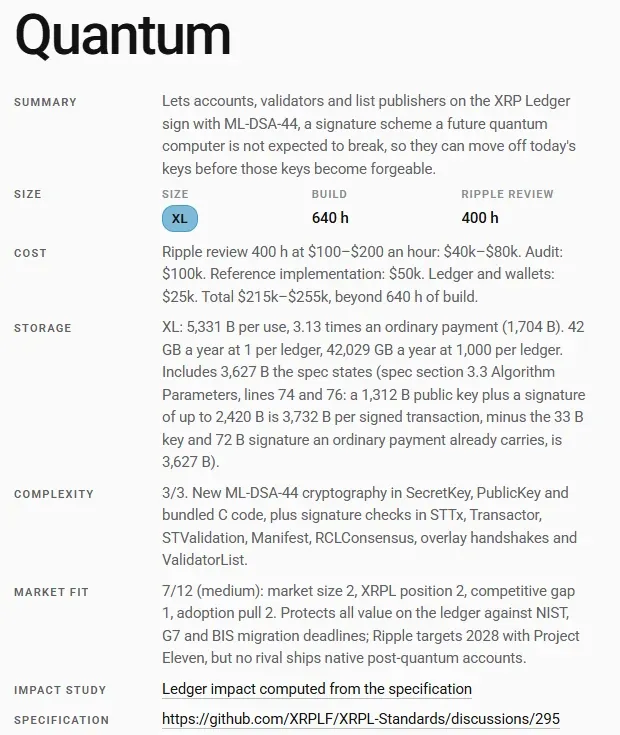
The Quantum entry on the Foundation's 2027 roadmap, showing size, cost and storage lines. Source: XRP Ledger Foundation, Quantum roadmap entry.
XRP Ledger quantum accounts and storage
The page turns that into history size. One such transaction per ledger adds about 42 GB a year. Push that to 1,000 a ledger and history grows by 42,029 GB every year.
Its impact study found zero new ledger entries and zero blocking defects. The cost lands on bandwidth, transaction history and verification time, not on ledger state.
Fees stay the same for now
XRP Ledger fees do not scale with transaction size, and the spec leaves the fee schedule alone. A quantum-signed transaction would pay the same base fee as a classical one while carrying about 3.7 KB more. The Foundation says the migration study should decide whether size needs its own fee rule.
The old key must be disabled
Every account signs with secp256k1 or Ed25519 today. Each signature puts the public key on the ledger. The page quotes Ripple's April 20 plan and says an attacker with future hardware could work from recorded keys.
Setting a post-quantum regular key does not protect an account if the classical master key stays enabled. The master key must be disabled too. Accounts that never rotate stay exposed.
Timeline, budget and open items
Ripple's plan calls for a full transition no later than 2028 through a new amendment. The Foundation schedules a migration study for the first half of 2027. Its cost line is $215,000 to $255,000 beyond the 640 build hours, with a $100,000 external audit.
Open items are listed on the page itself. Two admin RPCs still reject the dilithium key type. The Python publisher builds its seed from 48 bytes where the server uses 32, so one seed gives two different keys. The cross-implementation test vector file does not exist yet. The page also says consensus latency under a full set of dilithium validators has not been measured in public.
The spec sits in XRPL-Standards discussion 295. Its author opened that thread back in July 2025. Only one outside comment is visible. It came on October 15 and asks for an explicit scheme identifier instead of guessing from key length.
Bitcoin faces the same exposure, as our report on quantum landmines describes. The entry is a proposal, and no amendment has shipped. This summary of XRP Ledger quantum accounts reflects the Foundation's page and is not investment advice.
Related News
Stellar Bell Upgrade Adds W Addresses And Post-Quantum Checks
The Stellar Bell upgrade, Protocol 30, adds W-prefixed contract addresses, ML-DSA checks and a millisecond ledger clock. Mainnet vote is set for November 23.
Compound Proposal Guardian Cancels Proposal 618 Before A Vote
The Compound Proposal Guardian cancelled Proposal 618 before voting opened on October 22. See its criteria, the proposer's reply and the EPCF question.
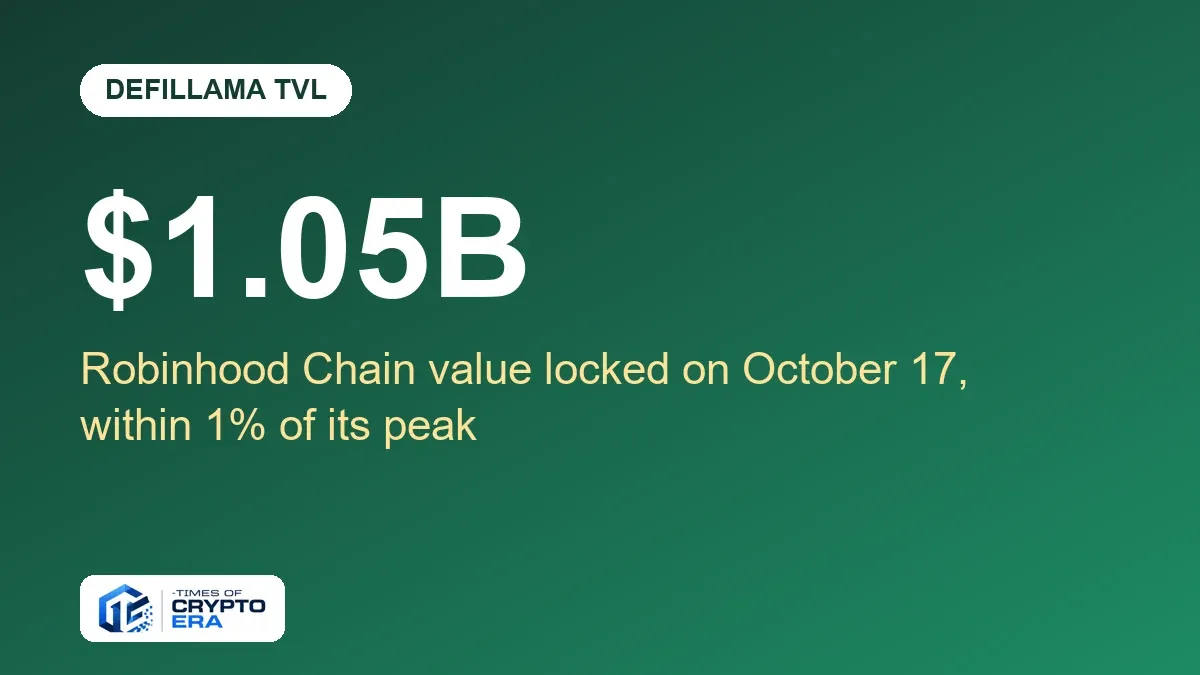
Robinhood Chain TVL Reaches $1.05B, Within 1% Of Its Peak
Robinhood Chain TVL reached $1.052B on DefiLlama as of Oct 17, after passing $1B on Sep 20. Morpho, Uniswap and Arcus lead, and 30-day trends differ by chain.
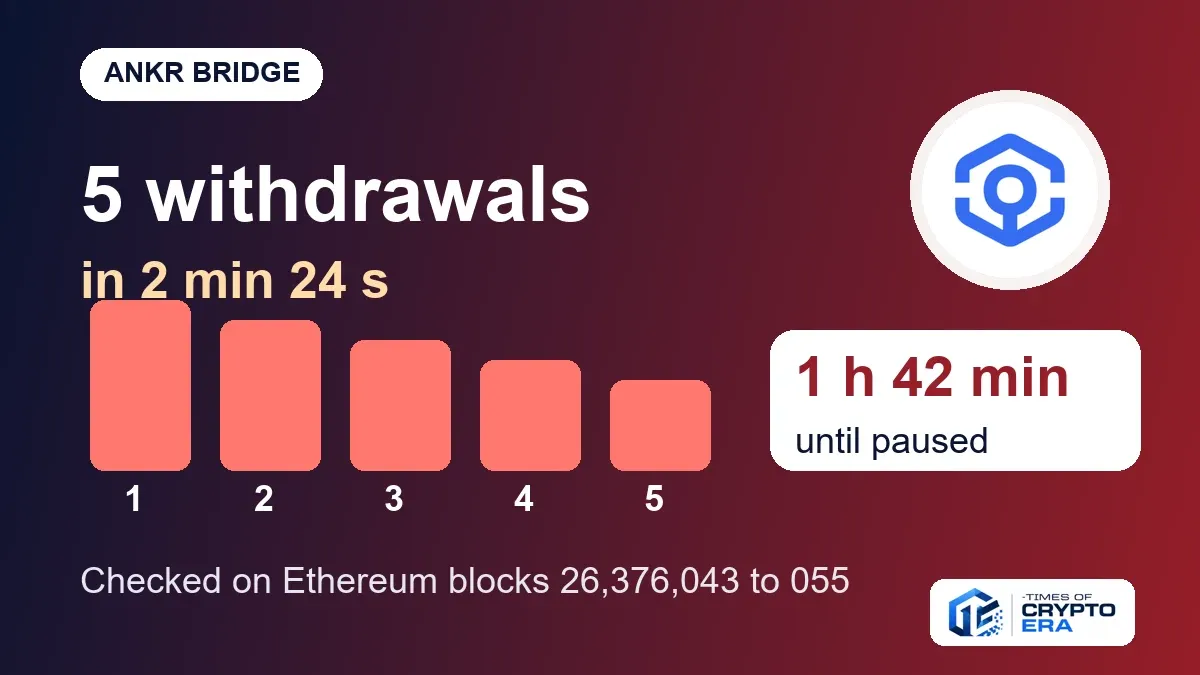
Ankr Bridge Exploit Drained Five Tokens In 144 Seconds
Ankr bridge exploit drained five tokens in five Ethereum transactions over 144 seconds, and the bridge was paused 1 hour 42 minutes later, chain data shows.