Coinbase Enables Native INJ Support, Removing the Bridge Step
Coinbase turned on native Injective support this week, letting users deposit and withdraw INJ directly on the Injective chain with no bridge or wrapped-token step required.

In this article+
Coinbase flipped the switch on native Injective support this week. Users can now deposit and withdraw INJ straight from the Injective network itself. No wrapped tokens. No third-party bridge. No routing through another chain first.
Injective confirmed the rollout directly on its own X account on September 4. "Native $INJ is live on @coinbase," the post read. "Coinbase users can deposit and withdraw INJ directly on Injective. No routing, bridging or wrapping required." The claim checks out against independent data too. CoinGecko's own live activity feed for INJ logged the same event within hours. It tagged the update "Native INJ Now Live on Coinbase for Direct Deposits/Withdrawals" as a standalone market-moving item, separate from any project or exchange messaging.
Why Bridging Was the Weak Link
Before this update, moving INJ onto Coinbase meant relying on a wrapped version or a third-party bridge contract. That extra hop is where a lot of crypto's worst days happen. Bridge exploits have drained billions across the industry over recent years. Every wrapped-asset step adds a smart contract that can fail, get exploited, or simply desync from the real token sitting on the origin chain.
Native support removes that layer entirely for Coinbase users. Deposits and withdrawals now settle directly against the Injective chain, the same way a Bitcoin deposit settles against the Bitcoin chain itself. BSCN, which first flagged the update to the wider market, framed the change plainly. The goal is direct network access without a middleman contract standing between a user's wallet and the exchange.
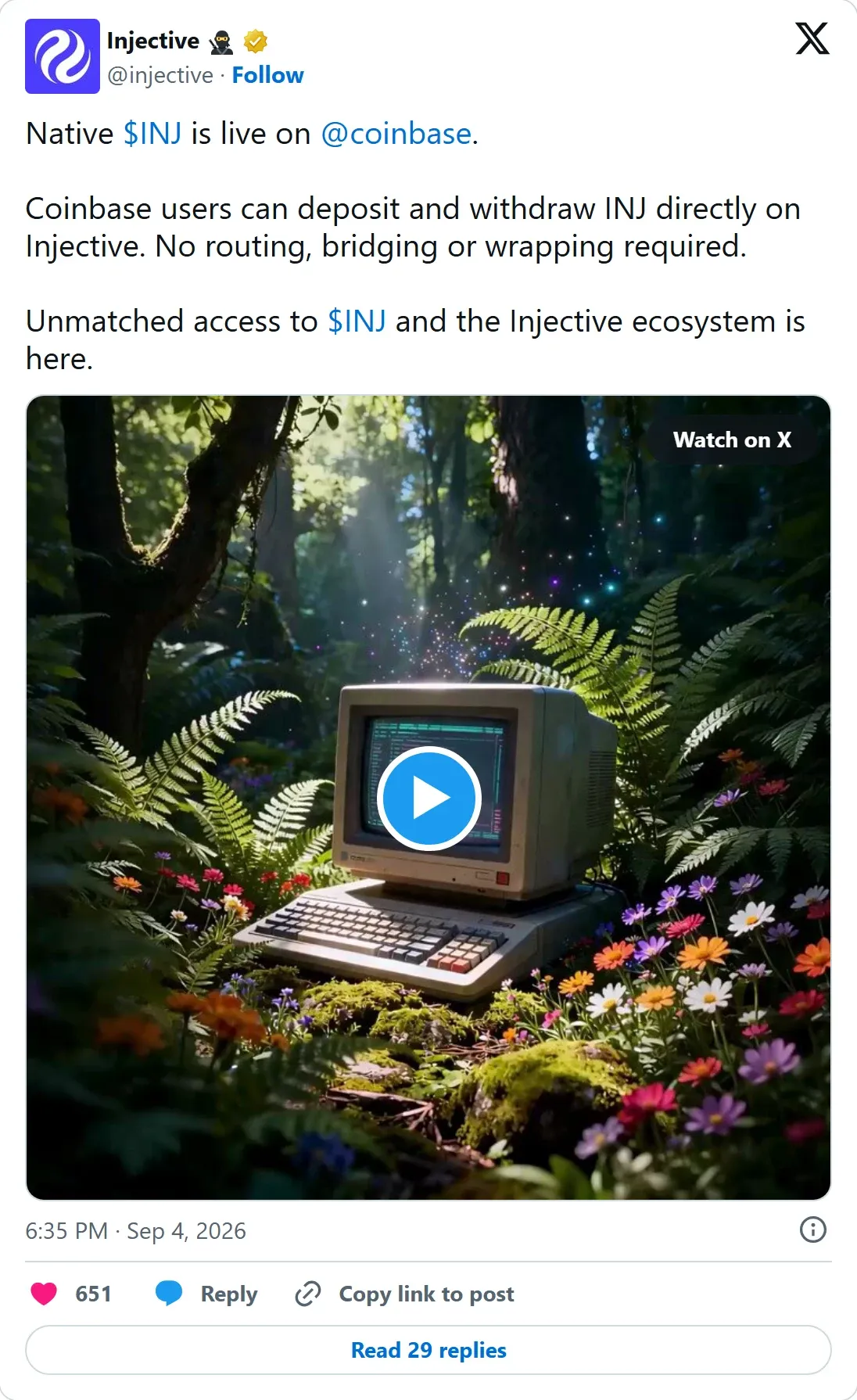
Injective's own X account confirming native INJ support on Coinbase, screenshotted October 15, 2026.
What Changes for Injective Holders
Injective positions itself as a finance-focused Layer 1 built for trading, tokenized assets, and increasingly AI-driven agents that transact onchain without a human in the loop. Removing bridge friction matters most for that specific use case. Institutional desks and automated systems moving size in and out of INJ now do it with one less point of failure. Bridge routes also tend to carry higher fees than a native settlement path. The switch is a cost change too, not just a security one.
The timing lines up with a rough patch for the token's price. INJ traded near $4.77 at the time of writing. That was down close to 6% over 24 hours, based on live CoinGecko data pulled directly from the token's own page. The drop tracked a broader pullback across the wider crypto market that day. It was not something specific to the Coinbase news itself, and the two events do not appear connected.
A Pattern Across Coinbase's Listings
Coinbase has been steadily adding native support for assets that previously required wrapped versions or bridge routes on its platform. Each swap reduces custody risk on both sides of a transfer. Injective markets itself heavily on speed and direct settlement. Having a top-tier US exchange support the asset without a bridge dependency removes an argument critics could otherwise raise against the chain's real-world usability.
Whether this translates into meaningfully higher deposit and withdrawal volume will show up in Injective's own onchain data over the coming weeks. For now, the infrastructure change itself is confirmed and live. It is corroborated by both the project's own account and independent market-data tracking, not just exchange marketing copy pushed out for the occasion.
This article discusses INJ token price movement. Cryptocurrency markets are volatile and this is not financial advice. Always do independent research before making investment decisions.
Written by
Writer and editor at Times of Crypto Era. Covers Bitcoin, DeFi, and market structure.
View full profile →Related News

ZEC Price Analysis: A 13.8% Slide Reaches The $1,086 Block
ZEC price analysis: Zcash fell 14% in 32 hours and closed under $1,112.77. Four-hour levels, a daily order block at $1,086.20 and two scenarios with triggers.

WAL Price Analysis: A Morning Breakout Takes Walrus To $0.0536
WAL price analysis: Walrus broke out on October 14 with a four-hour candle to 0.0515 on heavy volume. Gaps, order block, key levels and two scenarios inside.

Aave Risk Stewards Cut USDtb Cap 67% And Close LDO Deposits
LlamaRisk's October 13 post cuts the Aave USDtb cap 67%, closes LDO deposits with a cap of 1 and lifts USDC caps on Monad. Aave risk steward changes explained.