FinCEN Travel Rule Threshold Stays At $3,000 As $250 Plan Ends
FinCEN travel rule threshold stays at $3,000 after FinCEN and the Federal Reserve withdrew their 2020 plan to cut it to $250, a Federal Register notice says.
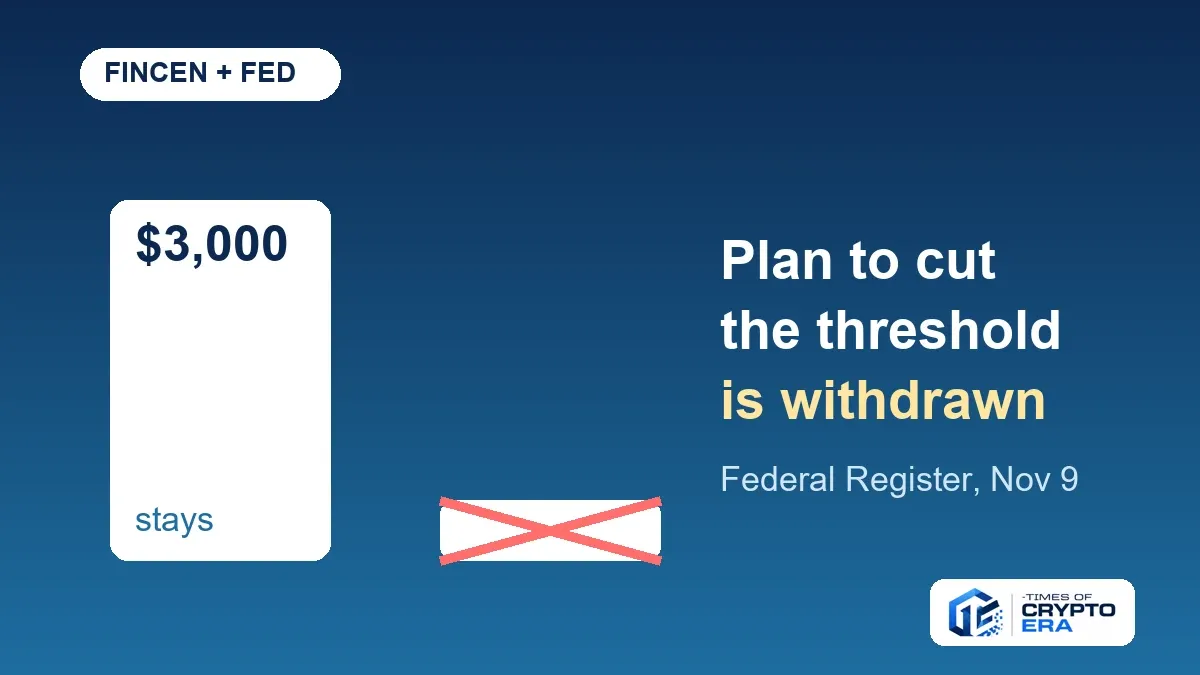
The FinCEN travel rule threshold stays at $3,000. A plan to cut it to $250 for cross-border transfers, including crypto, is gone for good, according to a Federal Register notice dated November 9.
FinCEN and the Federal Reserve Board filed the withdrawal on November 6 and it takes effect on publication. They are pulling a joint proposal from October 27, 2020, which sat unfinished for six years. The agencies say they "will not take further action" on it. Jimmy L. Kirby signed for FinCEN and Benjamin McDonough for the Board.
What the FinCEN travel rule threshold covers
Two Bank Secrecy Act rules set the line. The Recordkeeping Rule makes banks and nonbank firms collect and keep details on funds transfers of $3,000 or more. That covers transfers that begin or end outside the United States. The Travel Rule makes them pass those details along to the next institution in the payment chain.
The 2020 proposal would have dropped the FinCEN travel rule threshold and its recordkeeping twin to $250. It would also have spelled out that "money" in those rules includes convertible virtual currency and digital assets with legal tender status to a recipient. That second part is what pulled crypto firms into the fight.
Nothing changes for compliance teams today. Back in 2020 some commenters pointed out that the $3,000 line was set in 1995. It still stands. Transfers at or above it still carry the customer and transaction data.
The duties live in 31 CFR 1010.410, with the Federal Reserve's Regulation S mirroring the recordkeeping side. Both stay as written.
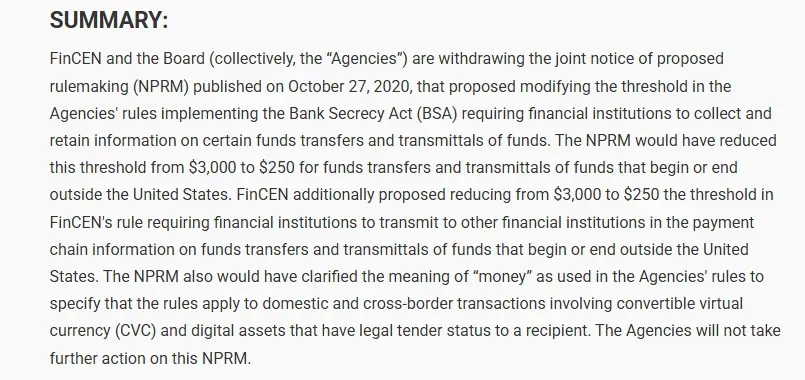
The notice as published in the Federal Register. Source: Federal Register, document 2026-22809.
Why the agencies dropped the $250 plan for the FinCEN travel rule threshold
The notice gives two reasons. More than five years have passed, and the agencies say fresh public feedback would help before any similar change. They also point to "significant recent developments" in the virtual currency industry, citing the GENIUS Act, the stablecoin statute enacted on July 18, 2025.
Nearly 3,000 comments came in on the original proposal. Most were against lowering the threshold. A big share were near copies of one form letter. Banks, money transmitters and trade groups said $250 would crush smaller institutions. They also warned it would hit ordinary remittances.
Some added that people might drift to less regulated channels. Others raised privacy and Fourth Amendment worries. Crypto companies objected to the digital asset language for a different reason. They said no international messaging standard existed for such transfers, which made compliance hard.
What a withdrawn proposal does not settle
A withdrawal is not a safe harbor. The notice keeps the door open. Any future change tied to virtual currency should be weighed against how markets have matured and which legal frameworks have since emerged.
It also makes one promise in plain terms. The withdrawal exists "to provide certainty to the public." Per the notice, no final rule will be issued without an additional opportunity for public comment. Any new attempt would need a fresh proposal, and a fresh round of comments, before it could bind anyone.
For readers who send crypto abroad through a regulated exchange, the practical picture is short. The threshold that triggers data collection is the same one as last week. What the agencies might propose next is unknown, and the notice sets no date for it.
Related News
Unhosted Wallet Rule Withdrawn: FinCEN Drops Mixer Proposal Too
FinCEN is withdrawing its 2020 unhosted wallet rule and its 2023 crypto mixer proposal. Here is what each would have required and why they were pulled.
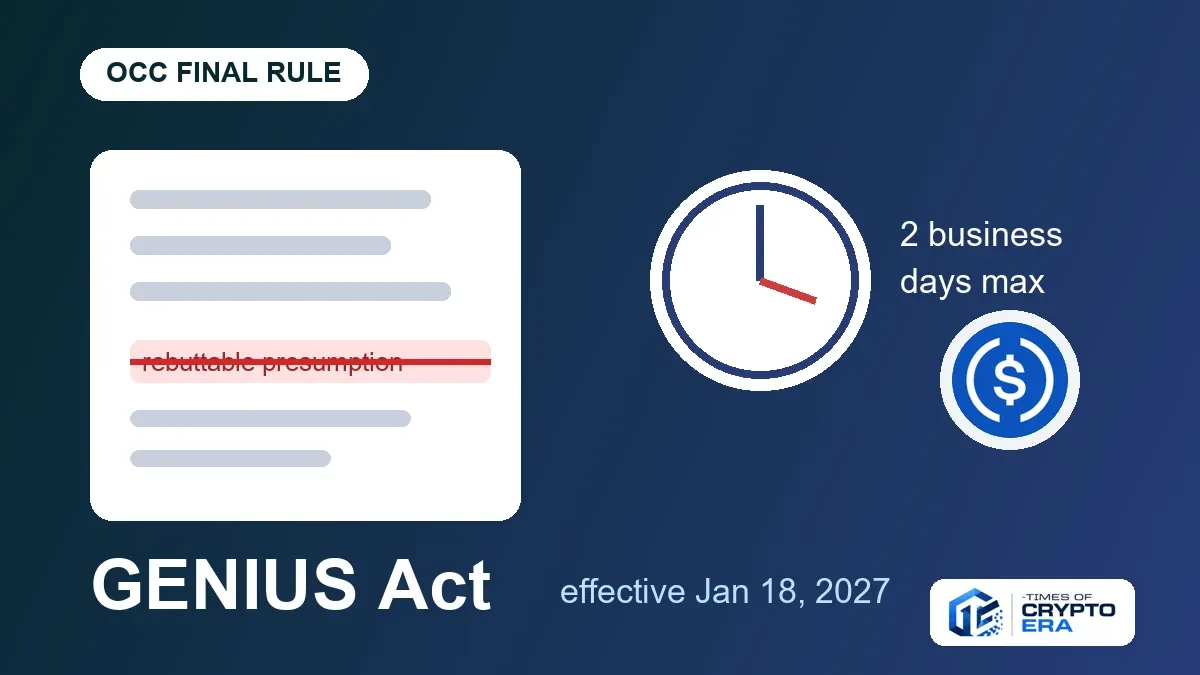
OCC GENIUS Act Rule Drops Yield Presumption, Keeps Two-Day Redemption
The OCC GENIUS Act rule is now final: it drops the proposed yield presumption, keeps a two-business-day redemption cap and takes effect January 18, 2027.

Fed Asks for Public Comment on Two Stablecoin Issuer Proposals
The Federal Reserve Board opened a 60-day comment period on two GENIUS Act proposals covering reserves, capital and applications for Board-supervised stablecoin issuers.

Thailand Crypto ETFs Get Final Rules, Effective October 16
Thailand crypto ETFs get final rules from the SEC, effective Oct 16, with Bitcoin and Ethereum first. See the 80% exposure test, custody and margin limits.