Coinbase Scam Defense Stops $4.7M In Fake Tesla Deepfake Giveaway
Coinbase scam defenses stopped $4.7M in a deepfake Musk giveaway, the company says. See how its agent works, what is unstated and how to spot a fake one.
An AI-enabled Coinbase scam prevention unit thwarted a scam centered around a fake Tesla give-away, which could have led to a loss of $4.7 million. The scam employed a deepfake video of Elon Musk and had a live stream that drew 500K+ viewers.
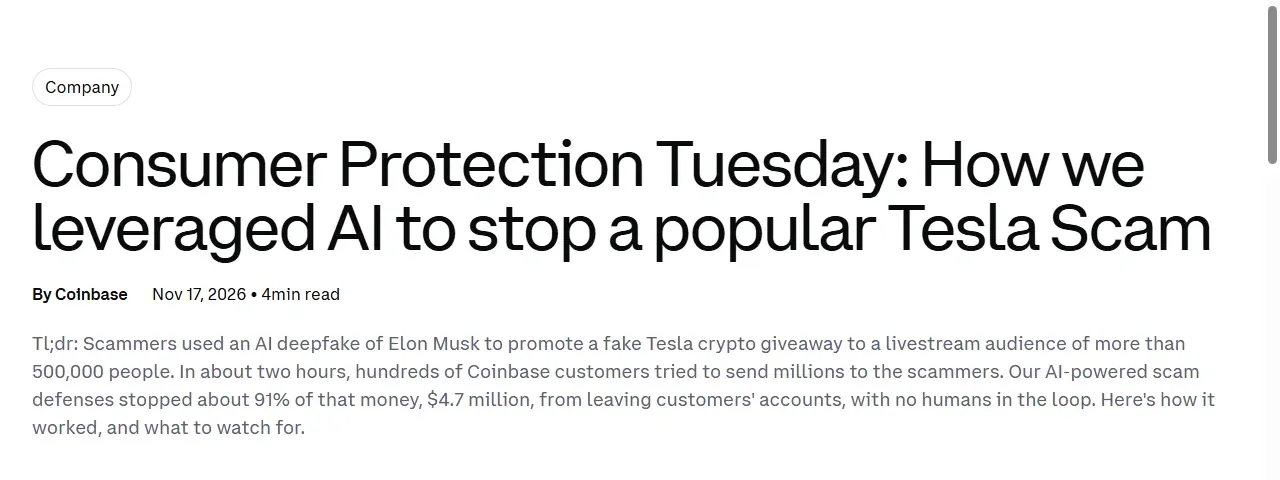
Coinbase blog post dated November 17, 2026, with the summary of the Tesla deepfake giveaway scam. Source: Coinbase blog.
How the fake livestream worked
The scammers cloned the live stream of Tesla's flying car demonstration and streamed it live via YouTube. The fraudsters displayed payment details, along with a QR code, saying that they will double the money sent to them as cryptocurrency. According to Coinbase, many of its users tried sending millions in just two hours.
Hack never took place and that fact is very clearly put by the company in their statement. The people logged into their account and clicked the 'Confirm' button thinking of the offer. This is the tricky part for cyber security experts because everything seems legitimate.
What the Coinbase scam agent actually did
The Coinbase team designed their scam detection tool using the following three steps. First of all, the model will give scores to the transaction that can be potential scams owing to giveaway patterns, brand impersonation, and new address generation. After flagging the transaction, the automated chat will start between the bot and the sender, and the bot will try to explain the scam pattern to the sender and ask questions to dispel the narrative. Finally, each reply is given a confidence score before it reaches the customer.
This scam detection tool had never encountered such a pattern before, as the use of deepfakes in conjunction with this scam along with the release of a new product was never encountered in the training data. However, it did manage to detect the pattern related to increasing money, preventing 91% of the money from being lost, with no humans in the loop.
Reading the $4.7 million figure
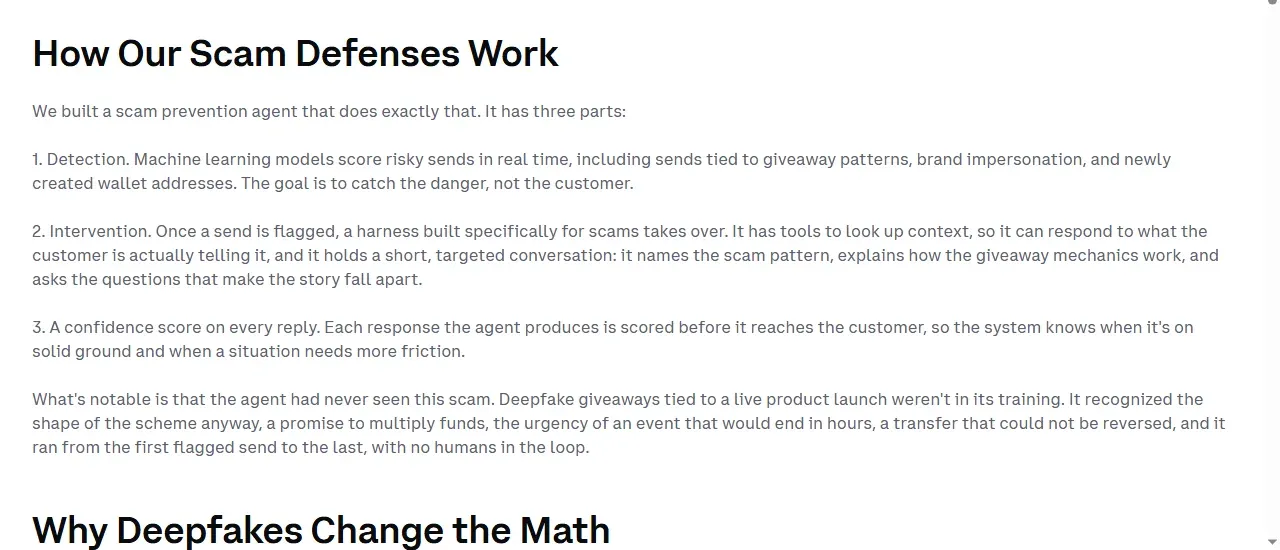
Section of the Coinbase post that explains how the scam prevention agent works. Source: Coinbase.
The above-mentioned figures of the Coinbase scam are based only on Coinbase's information. Moreover, according to the article, the $4.7 million accounted for 91 percent of the amount attempted in this situation, meaning that the amount attempted was roughly $5.2 million, though this exact figure is not provided by the company. Also, there were no customer totals disclosed.
What Coinbase says it will change next
As stated in this blog post, deepfakes change the economics of a fraud. While previously it was necessary to have a team, a studio, and weeks to make such a scam, today, as stated by Coinbase, it only takes a live-stream spot and a model. As soon as one version is shut down, another one pops up.
In order to address this challenge, the company is focusing on three key areas, which include: models enhanced by means of AI research, agents who review suspicious transactions for any type of fraud, and AI labeling of new cases.
Scam warning signs from Coinbase
This essay ends with Coinbase scam tips for all the exchange users: No legitimate person will double your cryptocurrency. Do not ever transfer your cryptocurrency to any payment details or QR code shown in the videos - check the offer on the company's official website.
Moreover, Coinbase never forgets to point out what they will never ask from you, for instance, to transfer any amount of cryptocurrency to claim your reward before the time runs out.
The Coinbase scam article is only a firm's blog post, but you can consider the number to be the claim, while the information provided is important no matter the situation. One such related story from this week is the malware attack of Optimizely, which hit crypto users on trusted sites.
Related News
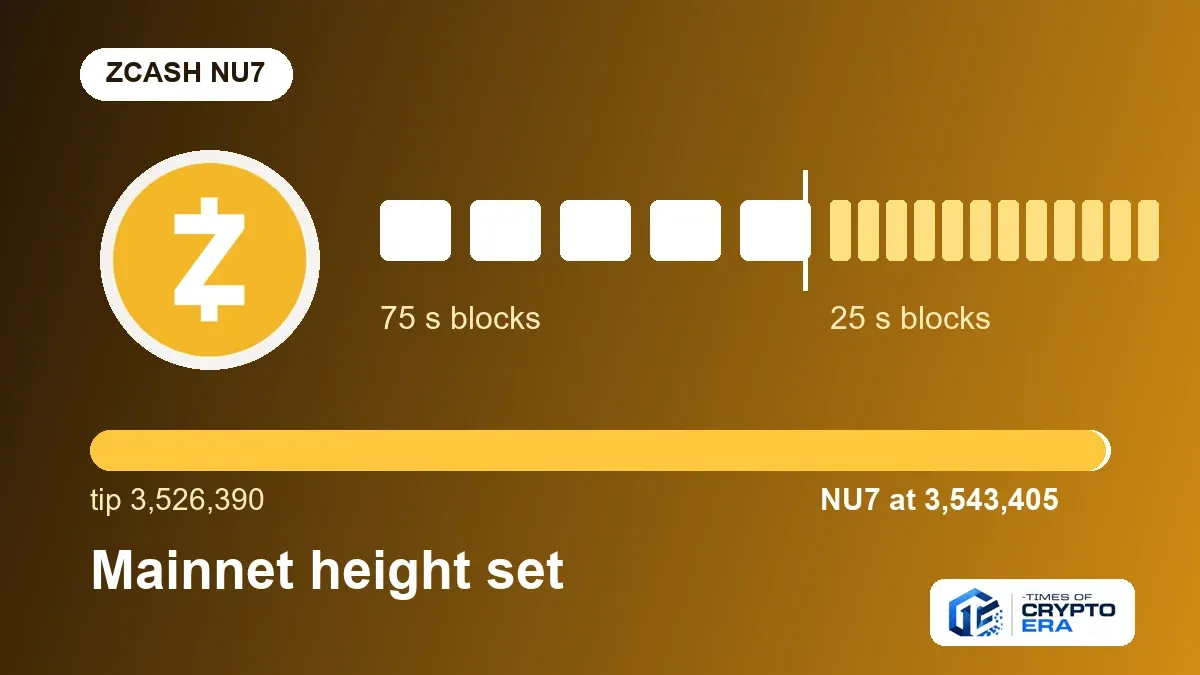
Zcash NU7 Activation Height Set At 3,543,405 As Zebra 7.0.0 Ships
Zcash NU7 will activate on Mainnet at block 3,543,405 and Zebra 7.0.0 is out. See what the ZIP changes, the 25-second blocks and node upgrade notes say.
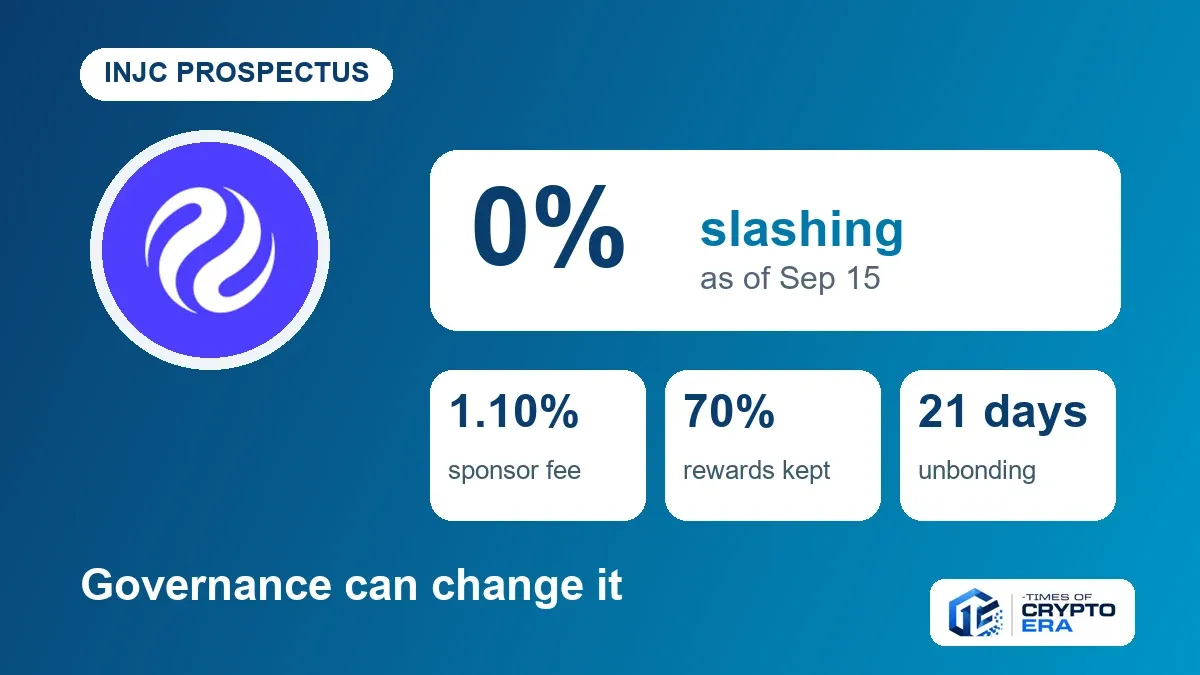
Injective Staking ETF Prospectus Shows Zero Slashing, 1.10% Fee
Injective staking ETF INJC carries a 1.10% fee, a 30% rewards split and a zero slashing setting that Injective governance can change, its SEC prospectus says.
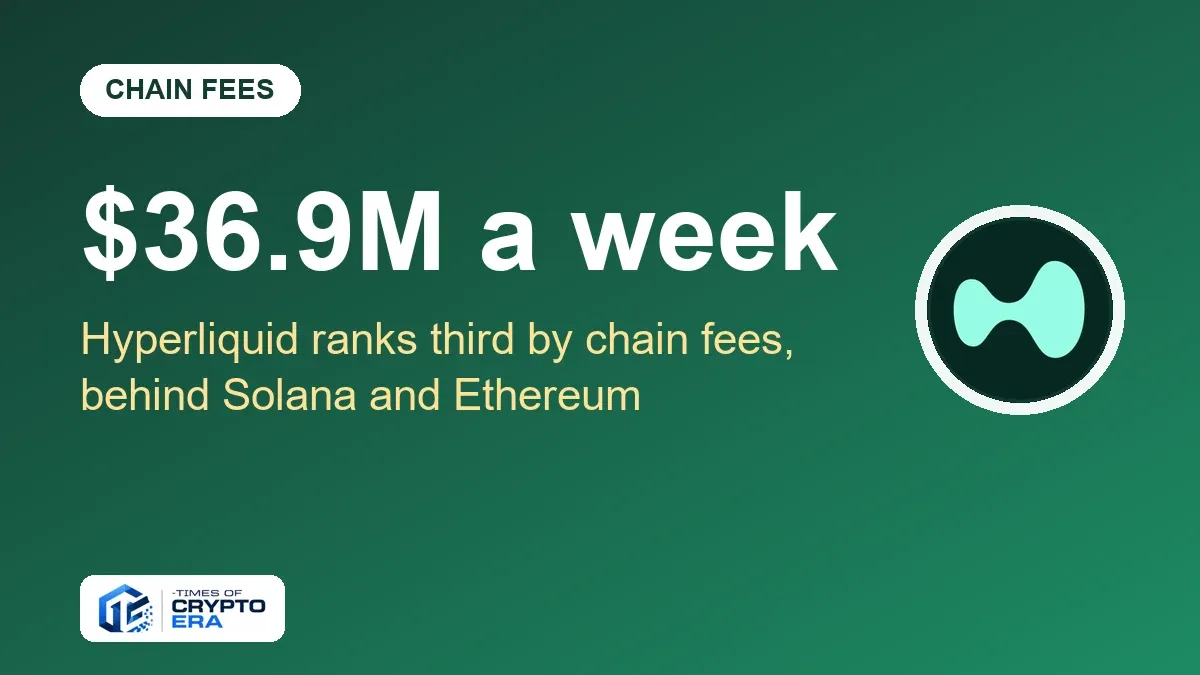
Hyperliquid Chain Fees Hit $36.9M In A Week, Third Behind Solana
Hyperliquid chain fees reached $36.9M in the week to Oct 17, third behind Solana and Ethereum. Perps made 53% and HYPE staking 41%, DefiLlama data shows.
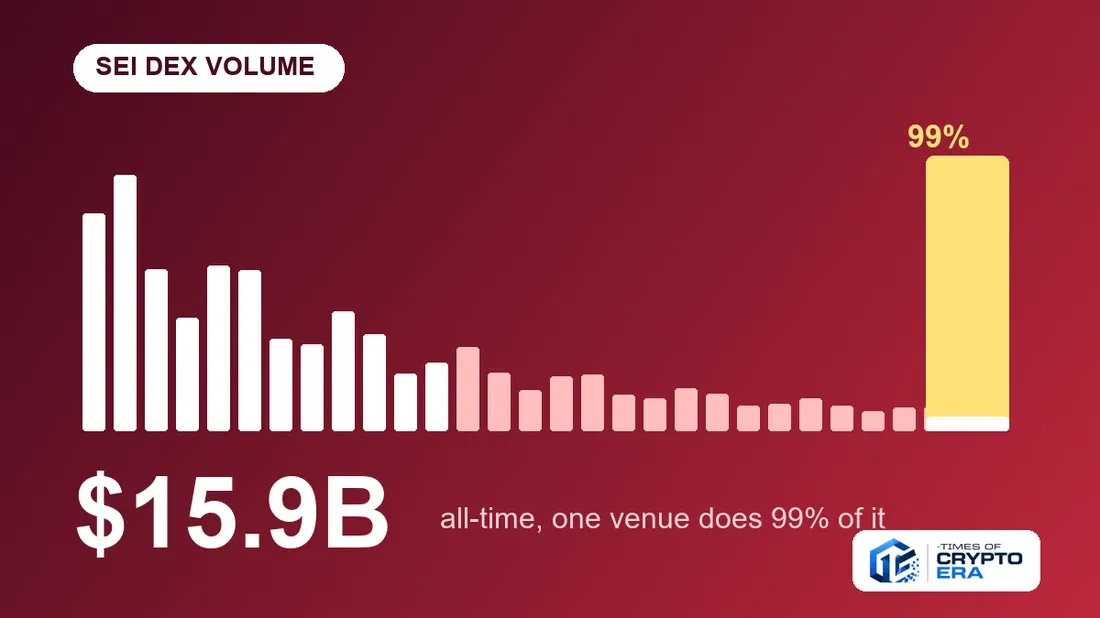
Sei DEX Volume Hits $15.9B All-Time, But One Venue Does 99% Of It
Sei DEX volume passed $15.9B all-time, but DefiLlama shows 30-day volume of $279M, about a fifth of the July 2025 peak, with Saphyre handling 99% of it.